An Adoption Evolution
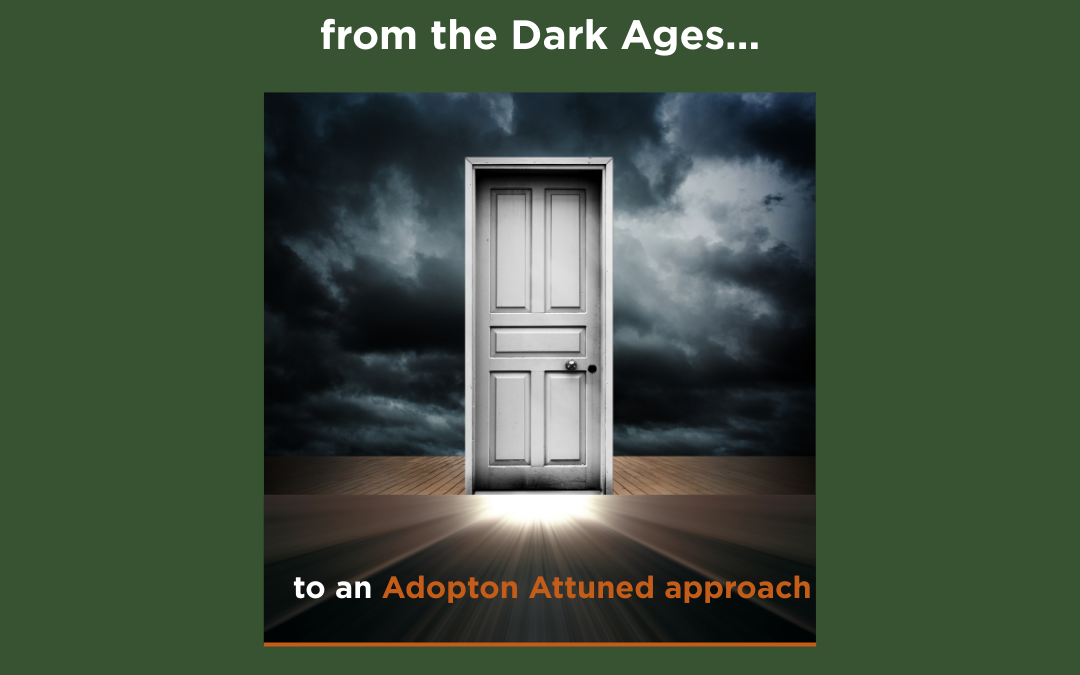
In a conversation on our podcast, Adoption Matters, Dr. Joyce Maguire Pavao, an adoptee and a pioneering voice in the adoption community said that she was adopted in the Dark Ages. Although the remark was spoken in a light hearted tone, it highlighted an important truth about adoption.
For decades adoption primarily served the adults involved. It hid the “shame” of the birth mother behind a wall of secrecy and it alleviated the adoptive parents’ heartache of infertility. The needs of the adoptive parents were primary. The child was separated from their birth family so the adoptive parents could build their family. The child was separated from their birth parents so they did not have to experience the stigma of out of wedlock pregnancy. Admittedly, reasons other than infertility and “illegitimacy” caused adoptions, nonetheless, they were the primary factor.
The Darkness of the Dark Ages of Adoption—for Birth Mothers
On the surface, adoptions in the Baby Scoop Era (1945-1973) were viewed as an elegant and apt solution that solved the “problems” of all involved. If we put on our TriSpective lenses, however, we will see that, in fact, adoption didn’t solve all of their problems. And it actually created some additional and significant problems for birth parents—especially birth mothers and for adoptees as well.
Contrary to what they had been told, birth mothers didn’t forget that their pregnancy happened. Nor did they forget the child they birthed. They didn’t simply pick up the pieces of their life and pick up where they left off with a smile on their face and their memories wiped clean.
As birth mother Claudia Corrigan D’Arcy says, “I think the most important thing to know about living the life of a birthmother is that it is never over. It comes in and settles on our skins and we can never wash it out. Forever stained and continuously affected in ways we never dreamed. And no one can tell us how it feels, or prepare us for what it feels.” Those are big words. Powerful words.
Adoption divided a birth mother’s life into Before and After. Permanently. In actuality, placing a child for adoption often led to a lifelong psychological, emotional, and physical burden sometimes identified as birthmother syndrome. Characteristics and symptoms of birthmother syndrome include: Ambiguous Loss; Trauma Responses; Unresolved Grief; Identity & Self-Esteem Issues; Emotional Extremes; and Situational Depression. Click on the links for a more in depth analysis.
For some women, relinquishing their child had devastating effects that were worsened by the lack of support, validation, and empathy. Family and professionals, social workers, and pastors who had encouraged them to choose adoption for their child also judged them as loose, unhinged, irresponsible, immoral or substance abusing. Society encouraged adoptions and then gasped at a birth mother’s ability to relinquish her child.
Judged and Abandoned
Birth mothers were often sentenced to silence and secrecy about placing their child for adoption. Typically, there was no acknowledgment of their grief and loss, and often counseling was nonexistent as well. That is the darkness of the Dark Ages.
Although the stigma of unwed pregnancy has dissipated, birth mothers continue to receive little support especially after their child has been placed. Finances are a significant factor. If a birth mother could not muster the resources to parent her child, it is unlikely she could pay for therapy. Some agencies offer therapy services but understandably, mothers are reluctant to return to the place that arranged for their child’s relinquishment. Revisiting the agency or attorney’s office is a trauma trigger for them.
The Darkness of the Dark Ages of Adoption—for Adoptees
For adopted persons, much of their experience unfolded under expectations of gratitude and absolute loyalty, of total disinterest in their birth families, and a pretense that they were the fruit of their adopted family tree. The trauma of early maternal/child separation was unrecognized. The primacy of their DNA was unseen. Adoptees were expected to live as if and to become as if they had been born to their adoptive parents. Typically, birth family was never mentioned or mentioned only to imply that the child had been rescued from their birth family.
Within the adoptive family, typically no understanding of the psychological, emotional, and physical impact of adoption existed. After all, the professionals had suggested that love was enough. Bring the child home and live happily-ever-after. Except they didn’t
The Darkness of the Dark Ages of Adoption—for Adoptive Parents
Adoptive parents welcomed the idea that adoption was an event, that once their child was placed with them, they could go home, begin their lives, and that love would be enough. Except it wasn’t.
Wishful thinking could not change the reality of different DNA, of trauma and separation, of different temperaments and interests, and of the absence of an innate sense of belonging. These factors were not irrelevant. They were salient and determinative. The adopted child could not magically become the embodiment of the adoptive parents’ dreams and family ancestry. This expectation was an impossible task.
Yet the rose-colored glasses of wishful thinking, professional reassurance, and parental yearning blended into willful ignorance. This led to a blindness to reality and a disinterest in acknowledging the complexity and challenges that adoptees and adoptive families face. This worsened an already difficult situation and made it worse for the entire family—especially for the adoptee.
A Light in the Darkness
We’ve progressed from the Dark Ages of Adoption and yet there is so much more change to create, pain to be assuaged, and healing to be accomplished. Growing Intentional Families Together coaches believe that our Adoption Attuned Approach to adoption offers a pathway to acknowledge, validate, and address the needs of adoptees, birth parents, and adoptive parents.
Adoption Attunement draws back the curtain of ignorance and denial and shines a TriSpective light on the reality of the challenges all members of the triad face. It recognizes the difficulties, focuses on learning about and meeting the genuine needs of adoptees, birth and adoptive families, and it affirms that while love is essential yet not enough. We encourage our clients to expand their perspective and step into conversations that embrace the TriSpective Approach.
If you decided to do that, what might you learn? What might you create for your family when you recognize these additional points of view? How might it increase your mutual understanding and strengthen your sense of connection to one another?
_________________________________________
Adoption Matters: Real People. Real Life. Real Talk and
Essentials of Adoption Attuned Parenting
Read books written by our coaches
Click to learn more about Adoption Attuned Certified coaching!