Last week we announced that adoptee Jean Kelly Widner had been named the 2026 recipient of our annual Shaping the Future Award. She is the author of the ground-breaking book Adoption Paradox: Putting Adoption in Perspective. Jean is an articulate and courageous voice in the adoption community.
We Know Adoption is not a solitary experience.
I value Jean’s efforts to learn about, appreciate, and share the experiences, losses and needs of all members of the adoption triad as well as those in the adoption constellation. Her work illustrates a TriSpective point of view and Tri-Relational Interconnectivity.
Adoption is not a solitary experience. It is a family experience that exists within a system—one which Jean challenged us to improve. She made several interesting points about what triad members need.
What Adoptees Need: Psychological Permissions
It is obvious that many adoptees struggle to engage at a deep, genuine level with their parents. Adoptees often go along to get along. Or, they become estranged because that is the only way to reserve their mental health. So, what gets in the way? In the absence of clear permission and invitation to engage in deep, authentic, and difficult conversations, these difficult discussions rarely happen.
Adoptees often hesitate to freely express their true thoughts, dreams, feelings, and fears while their adoptive parents are still alive. It may feel unsettling, dangerous, life-changing, even life-threatening to acknowledge any chinks in the and-they-lived-happily-ever-after-fairytale. Many possible reasons might underpin this hesitancy including:
- A sense of loyalty to their adoptive parents
- A fear that speaking candidly might result in rejection by their adoptive families
- A fear that once they begin to speak in ways that highlight the challenging parts of adoption, any protective self-denial about what adoption “costs” adoptees will no longer be possible
- A fear that they will be judged angry or ungrateful. (They may, in fact, justifiably feel either or both.)
- An awareness of clear societal and family taboos regarding “hard” topics connected to adoption
- An inability to find the opportunity to initiate Difficult Conversations because their adoptive parents shut them down or deflect when they try to talk about things
- Lack of adequate language to express their complex experience in ways that hold the duality of adoption—the loss and the gain, the benefits and the losses
- An awareness that their adoptive parents are unwilling to acknowledge adoption complexity
- A fear that one or both of their adoptive parents are too emotionally fragile to engage in Difficult Conversation.
- A belief that their adoptive parents are incapable of facing how they fell short of meeting the adoptee’s needs while they were raising the child
- A belief that their adoptive parents are unwilling or unable to be accountable for their mistakes and missed opportunities
- Emotional volatility—parents weep or get angry when the adoptee raises issues
- The adoptee chooses not to rock the boat and goes along with the fairytale
What Birth parents Need
Birth parents face the difficult task of coming to terms with their separation from their child. Relinquishment whether voluntary or involuntary impacts them profoundly. Most experience life-long grief from this traumatic fracture—especially birth mothers.
After being encouraged and/or pressed to allow their child to be adopted, society then reacts in appalled shock at the audacity of that decision. A not-so-subtle negative judgment is delivered. Birth mothers in particular are constantly being asked to justify their choice or compliance. Many suffer in secret without support or comforting rituals that acknowledge their loss
Questions birth mothers or birth parents might struggle to answer might include:
- Did I do everything I could to prevent the relinquishment from being necessary?
- Will my child grow to be healthy, happy, productive and “successful?
- Will my child understand why the adoption happened
- Will they forgive me?
- Did I make the best decision for my child?
- How can I come to terms with this trauma, mentally, emotionally, physically
- How will I open myself to relationship with a significant partner
- How will I parent other children that I might have?
- Could I have made a different choice?
- Should I have made a different choice?
- How can I cope with this life-long, deep grief,
Jean’s Advice for Birth Parents and Adoptive Parents
“It’s about Your child, Not You.” The narrative must remain centered on the adopted person. Jean is not dismissing the trauma that birth and adoptive parents experience. She acknowledges this painful reality AND calls parents “to do their own work.” It is imperative that they acknowledge, address, and handle their “stuff.
This helps the parents and it benefits the adoptee because it reduces the impact of unresolved parent trauma falling out on the adoptee. When parents take care of their trauma burden, it usually improves all of their intimate relationships. As they understand their own pain, loss, and grief issues, they can develop healthy ways of resolving and coping with the or at least be aware of when these losses or grief are impacting the current situation.
Predictably, this would lessen some common negative behaviors seen in adoption triad relationships for example secrecy, tension between adoptive parents and birth parents, balance-of-power issues. Birth and adoptive parents can then come together in a co-loving way of parenting the child they all love.
Another “golden nugget” that Jean suggested for both birth and adoptive parents was the idea of grace. I know when I have received grace it felt like such a balm, a cushion of understanding, empathy, and validation. Grace is something that all humans need, especially when we are hurting, struggling, or being accountable in a difficult moment or for a hard choice. Receiving grace when we desperately need it is a blessing. Surprisingly, sometimes the person most likely to withhold grace is ourselves! Let’s change that!
Birth parents and adoptive parents have the power to give grace to each other. We can do that!
Jean’s advice for Adoptees
Jean is not just a talking head. She’s an adoptee with personal knowledge of the challenges adopted persons face. She had four “golden nuggets” for adoptees. I believe they shine a clear light on the path.
- Find your own agency. Work on your own behalf.
- Believe in your own worthiness
- Do your own work. Face it. Don’t stuff it.
- Don’t give up. You’re worth it. You deserve belonging. And love. And peace.
Jean’s advice for the system
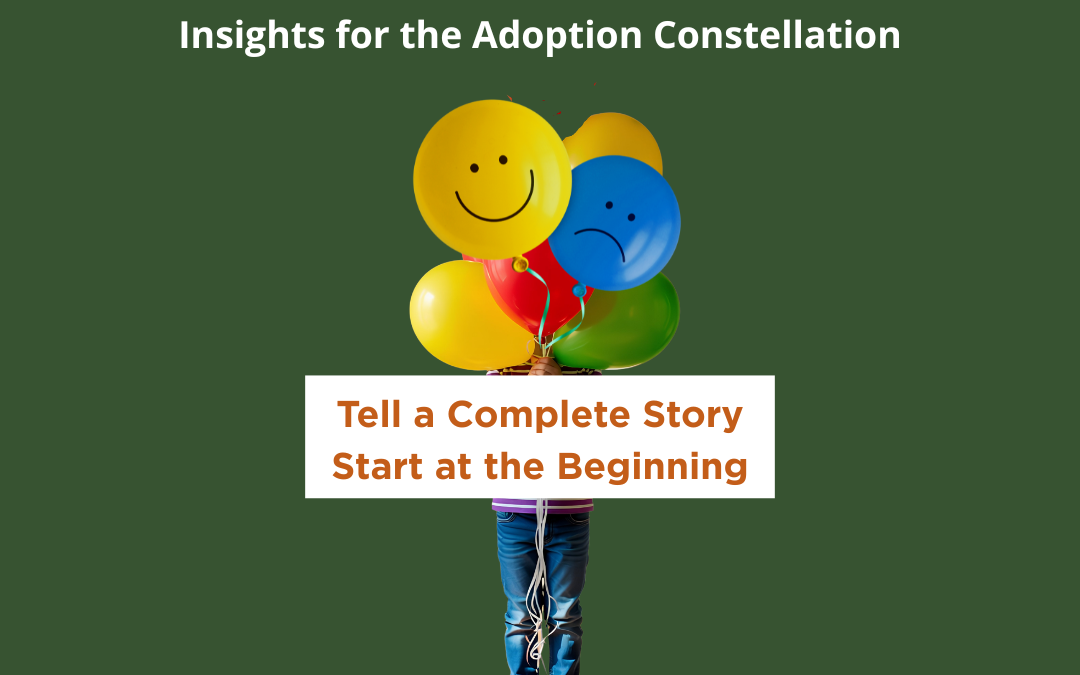
Ask different questions. This will lead to a new set of solutions and strategies. Open minds, eyes, and doors. Look at the entire picture, not just what you wish were true. Acknowledge that good intentions do not guarantee good results. Validate the hard parts. Witness the grief, pain, loss and struggles. Tell a complete story.
Begin at the beginning. Include it all. All the people. All the facts. All the challenges. All the love. Do your part to solve the problems that lead to adoptions
How Can We Make It Better?
Every child deserves a loving, safe, permanent home. As a society, we must stop focusing on pulling kids out of the white water, because their families are overwhelmed. We must find ways to keep kids and families from falling into the white water in the first place.
Strive to prevent family separation. Offer solutions before family fracture happens or becomes necessary. The cost of family fracture is high and its repercussions are life-long. It must be viewed as a solution of last resort not an easy win/win/win for all.