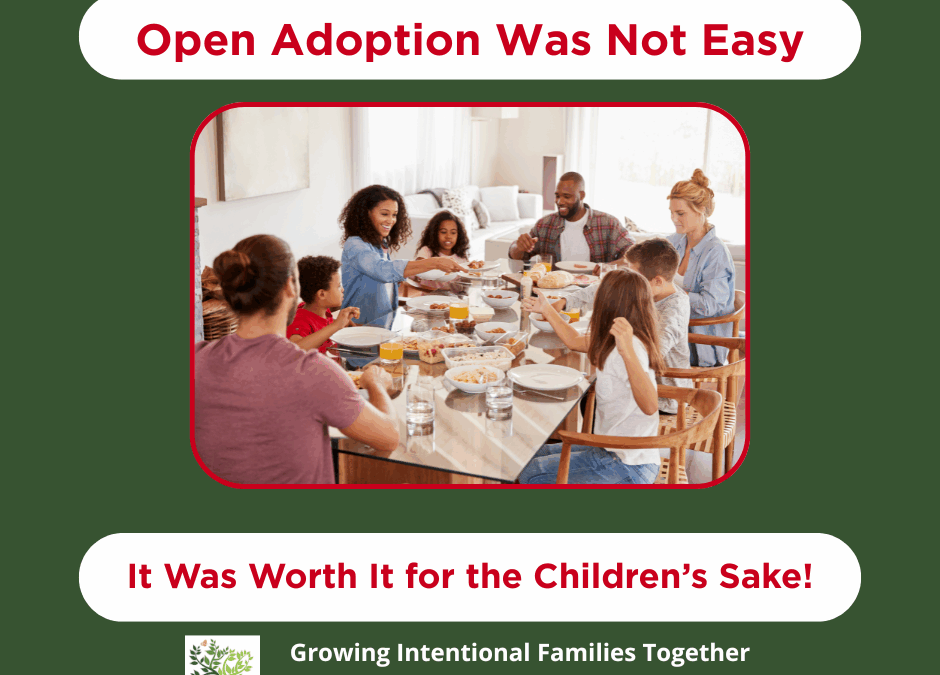
 Let me repeat, Open adoption isn’t easy AND it was so worth it! This is the key point of our recent vlog interview with Linda Sexton, author, pioneer in open adoption, and an adoptive parent. Through the lens of being a part of an open adoption for thirty years, Linda saw, and wrestled with the complexities inherent in an open adoption. She personally experienced slogging through the hard stuff. She observed how every person involved was coping with complex and diverse emotional burdens and the uncomfortable reality that adoption originates in profound traumatic loss and grief which of course, impacts them all individually and collectively.
Without minimizing or denying that painful reality, we can also say that it is not solely about grief and loss. There can be also be connection, joy and gains. Happiness can coexist with anger and sadness. And, inevitably nature and nurture will bump up against each other. Sometimes this will bring unexpected delight. Other times it will bring chaos and conflict. This will not come as a surprise when we acknowledge that everyone joined by this adoption comes with their individual and unique set of challenges, burdens, strengths, skills, perspectives, preferences, aptitudes, history, experiences, and DNA.
Making sense of the pieces
Let’s consider the pieces inside a kaleidoscope for a bit of insight. Each time one piece is moved, all the others do as well. They are interconnected and they affect each other. Whether we judge it beautiful or chaotic is a matter of interpretation.
But in adoption we are not talking about inanimate objects so the metaphor weakens. We are talking about human beings not pieces. People with thoughts, feelings, memories, desires, personalities and a need for belonging. And, of course, relationships in every adoption are complicated. Relationships in open adoption are even more complicated by several magnitudes.
When we accept this fact, we let go of the naive expectation that adoption will be easy. It is certainly never easy for the adoptee nor will it be easy for the parent (birth or adoptive.) For adoptees, it is a lifelong process of learning how to braid their dual heritages into a healthy, cohesive identity, finding belonging, and building connection. They will always be adopted; it is not something that will end at some future date.
Adoption permanently realigns their life
Once they become adults, adoptees will decide with whom they want to continue to be in relationship. Learning from Linda’s insights and advice will help ensure that adoptive and birth parents will be welcomed by their adult child.
Birth parents and adoptive parents also wrestle with the task before them: how to weave a family from these diverse threads and create a tapestry in which all are seen, valued, respected, and committed to the welfare of the child that links them together.
So, it is a given that adoption is complicated, especially an open adoption. Adoptive parents roll up their proverbial shirtsleeves and educate themselves about the unique responsibilities of adoptive parenting. They unlearn misinformation, let go of cultural myths, remove the rose-colored glasses, and learn how to be the parents their children need them to be. Attuned, informed parents acknowledge that their children’s lives didn’t start on the day they joined their adopted family. They recognize that adopted children come with a history, with an ancestral lineage, and with the blueprint of their DNA. Parents work with these realities not against them.
What Helped Build a Successful Open Adoption?
Let’s get back to our conversation with Linda. She identified this as her most salient point: It was having the mindset that her children’s birth family was family. She posited that when they truly embraced this belief, the decisions, attitudes and actions became simpler. Not easy, but clearer. These people were not strangers, intruders, or inconveniences to be feared. They were her children’s family. And by extension, they were her family.
Several times during the interview Linda said that in spite of all the “work” involved in navigating an open adoption was worth it. Why? Because it was better for her children. She mentioned how open adoption helps ease some aspects of adoption. For instance, adoptees in open adoptions experience genetic mirroring. They “see” themselves reflected in their birth parents’ behaviors, talents, inclinations as well as their bodies. Also, birth parents are available to answer questions and to develop ongoing relationships. The adoptee’s existence is not a secret that needed to be hidden. In many cases they are able to develop relationships with their biological siblings in real time rather than after decades of separation and secrecy.
All of these factors support the children’s identity development process. And, drum roll…it’s still challenging, still hard work and still worth it for everybody
The TriSpective Approach
When we utilize this mindset, we build a deep empathy for our triad members. We can use this approach as a ladder to help us peek above our siloed perspectives. This expands our view as well as our understanding of our fellow travelers-in-adoption. We see beyond the assigned roles of adoptee, birth parent, adoptive parent, sibling, foster parent, etc. to recognize and appreciate their humanity. It becomes much more difficult to treat them as “other” or as an inconvenience or an intrusion. They are fellow travelers on our adoption journey. They become family. We treat them with the respect, patience, loyalty, and affection of family. And that is a very good thing.
Linda’s memoir is available wherever books are sold.
Bookshop.org: The Branches We Cherish: An Open Adoption Memoir
Amazon: The Branches We Cherish: An Open Adoption Memoir